
Reimagining Humanitarian Action and Climate Migration through Local Faith Actors
Noor Ur Rehman
JLI South Asia Regional Coordinator
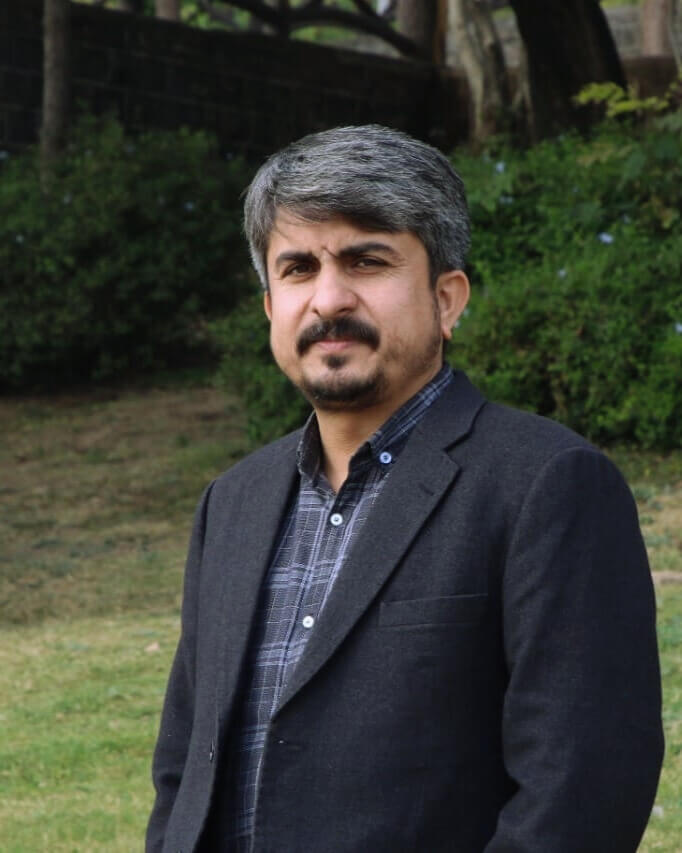
At the Regional Humanitarian Partnership Week (RHPW) 2025 in Bangkok, the Asia-Pacific Faith-Based Coalition for Sustainable Development (APFC) convened a thought-provoking session titled “Faith at the Frontlines: Reimagining Humanitarian Action and Climate Migration through Local Faith Actors.” The session brought together regional practitioners, policy actors, and faith leaders to critically examine how faith communities shape humanitarian responses, particularly in the context of climate-induced migration.
The session featured a rich panel representing different humanitarian networks, research institutions, and faith-based movements:
- Moderator: Desmond Lim, Faith and Development Regional Advisor, World Vision South Asia & Pacific
- Alwynn Javier, Asia Pacific Regional Representative, ACT Alliance
- Shanna Ligo, Programming Director, REACH Famili Senta (World Vision Vanuatu)
- Nobuyuki Asai, Director for Sustainable Development & Humanitarian Affairs, Soka Gakkai International
- Noor Ur Rehman, South Asia Regional Coordinator, Joint Learning Initiative on Faith & Local Communities (JLI)

Images: Regional Humanitarian Partnership Week (RHPW) | Bangkok, Thailand | 10 December 2025
As climate-related disasters intensify across Asia and the Pacific, displacement is becoming a defining feature of humanitarian response. Unfortunately, humanitarian systems overlook the actors who are already present before crises strike and remain after external responders leave: local faith actors.
Why Faith Matters in the Humanitarian and Climate Nexus
Asia-Pacific is home to the world’s largest concentration of religious diversity. Faith traditions have shaped social organization, care systems, and community resilience for centuries, long before the emergence of modern humanitarian architecture.
Opening the session, participants were invited to reflect on the following questions:
- Are faith actors uniquely placed to mobilize compassion?
- Is faith irrelevant in the humanitarian nexus or essential to it?
- What does a truly “human” humanitarian response look like?
Images: From left to right, Nobuyuki Asai and Alwynn Javier
The discussion made it clear that faith is at the centre. It shapes how people understand loss, displacement, risk, and hope, and is essential to reclaiming the “heart” of humanitarianism. during a period of politicisation and bureaucratization of the humanitarian sector.
From ACT Alliance’s ecumenical humanitarian legacy to Soka Gakkai International’s psychosocial and dignity-based approaches, the discussion highlighted how faith-based engagement strengthens localization, bridges secular and religious language, and challenges decolonized models of humanitarian action.
Faith actors particularly churches and faith-based organizations have played a long-standing role in supporting communities well before the emergence of the modern multilateral and humanitarian system. Their engagement is rooted in lived relationships, moral responsibility, and sustained presence rather than project cycles. The ACT Alliance itself emerged from decades of ecumenical collaboration among mainline Protestant and Orthodox churches, founded through the World Council of Churches (WCC), the Lutheran World Federation (LWF), and specialized faith-based ministries, with a clear mandate spanning humanitarian response, development, and advocacy. Central to this work is a commitment to locally led and decolonized approaches, which raises critical questions about how resources, decision-making, and power can be shared more equitably within systems marked by asymmetric power relations. To navigate these complexities, faith actors increasingly rely on “bilingual” and “multilingual” approaches, speaking both the language of faith and theology, and the secular language of human rights, humanitarian principles, and sustainable development to engage meaningfully with multilateral institutions and civil society.
Through ecumenical, interfaith, and interreligious engagement, churches and faith-based organizations continue to affirm their role as legitimate humanitarian actors. In the face of humanitarian crises, climate change, and social injustice, faith communities bring not only material assistance but also messages of hope, spiritual resilience, and deep experience in environmental stewardship and care for creation. This was particularly evident during the Ebola and COVID-19 responses, where the role of faith and spirituality in shaping social narratives and community trust was widely recognized, with ACT Alliance members actively involved in emergency response efforts. In the Pacific region, ongoing collaboration among the Pacific Conference of Churches, the Pacific Theological College, and ACT members such as the Reweaving the Ecological Mat (REM) initiative demonstrates how faith-based approaches can integrate theology, indigenous knowledge, and ecological justice to address the intertwined challenges of climate change and humanitarian vulnerability.
Faith & Climate Migration
A key contribution to the session was the presentation of findings from the 2025 Evidence Review on Faith and Climate Migration, led by JLI in collaboration with Christian Aid which shows that
- Climate migration in South Asia is increasing and deeply uneven, driven by floods, droughts, river erosion, and glacial melt.
- Migration is a survival strategy.
- Women, children, and religious minorities face disproportionate risks.
- Faith shapes how communities interpret climate shocks often understood as tests, warnings, or moral calls across Islamic, Hindu, Buddhist, and Christian traditions.
The review also documents how faith leaders provide “intangible support” during displacement: communal prayers, pastoral counselling, ritual hospitality, and spiritual guidance that rebuild dignity, cohesion, and emotional resilience.
Faith in Practice
Drawing from Vanuatu, Shanna Ligo shared how a locally developed pastoral care module supported communities affected by multiple cyclones and earthquakes. Through prayer, listening, trauma-informed breathing exercises, and community dialogue, faith leaders helped families, particularly children, process their fears and losses. These approaches demonstrate that psychosocial support cannot be culturally neutral. Faith-sensitive care responds to how people actually heal.
Secondly, Nobuyuki Asai from Soka Gakkai International shared Soka Gakkai’s psychosocial support practices including the “Bonds of Hope” concerts and elaborated about the role of Buddhist rituals in recovery. These initiatives create spaces for solace and encouragement, helping those affected to feel relieved and rise up toward the future.
Key Messages and Recommendations
The session concluded with regional calls to action:
- Integrate faith actors into climate and migration policy frameworks
- Recognize faith-based psychosocial practices as legitimate coping strategies
- Invest in local faith actors as frontline responders
- Promote gender-equitable faith messaging, especially for women and girls on the move
- Build an Asia-wide learning platform on Faith & Climate Migration
A Collective Way Forward
Faith actors are strategic partners in humanitarian action.
As emphasized throughout the session: “Faith is central to resilience, identity, belonging, and hope”
The Asia-Pacific Faith-Based Coalition invites regional faith-based organizations, humanitarian actors, and policymakers to engage, collaborate, and co-create a more human-centered humanitarian system, one that listens to lived experience and values faith at the frontlines.
Scan the QR code to get involved!

If you are a regional FBO, join a regional coalition of FBOs of diverse faiths committed to advancing the SDGs through:
- Advocacy
- Engagement and collaboration
- Knowledge-sharing
Scan the QR code to get involved!

0 Comments