
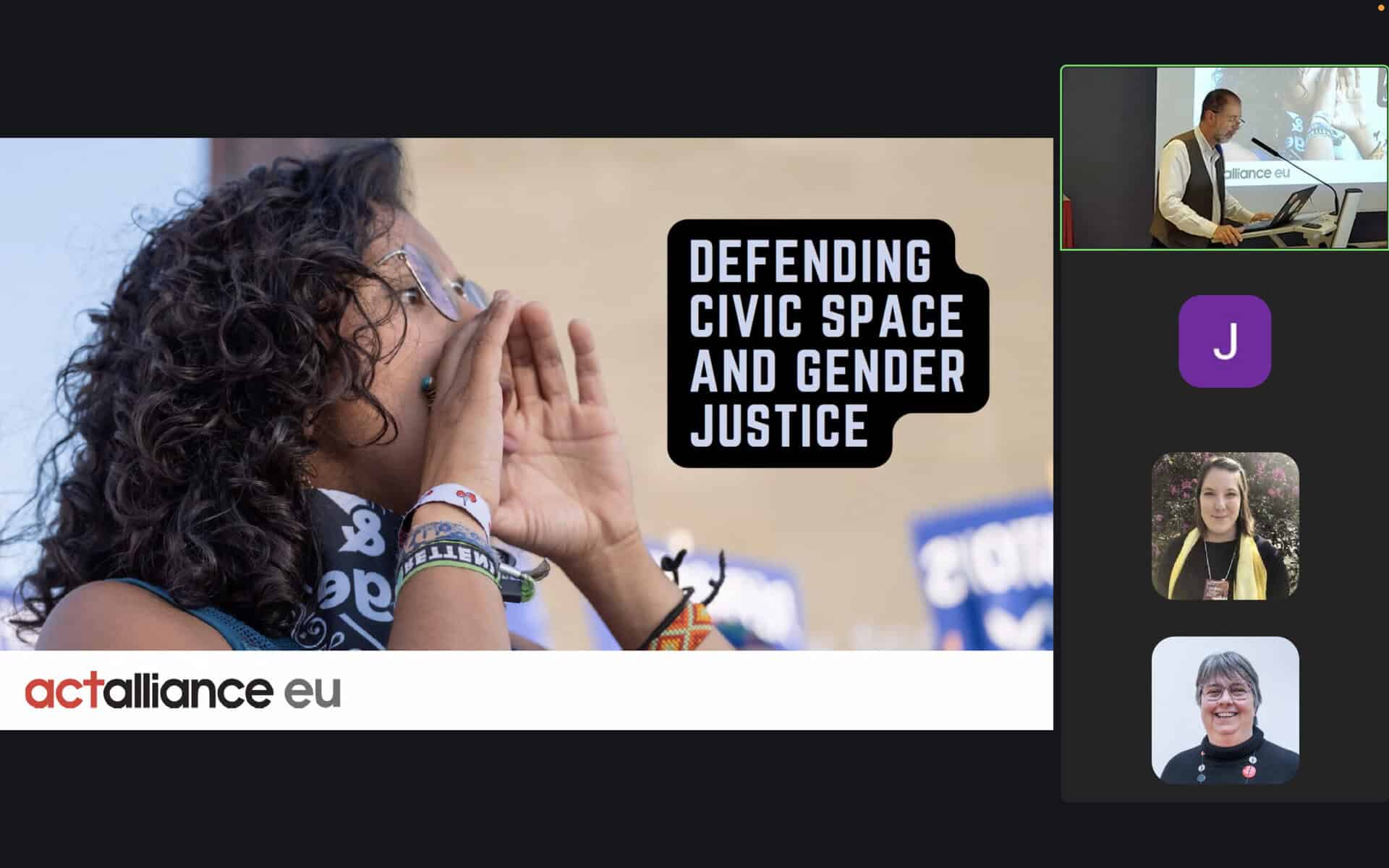








A staggering 73% of the world’s population now lives under restricted civic space, with only 39 out of 198 countries enjoying an open environment, according to data highlighted at the ACT Alliance General Assembly advocacy event on May 27, 2026.
The high-level international assembly, which brought together global faith leaders, human rights advocates, and multilateral policy experts, served as the formal launchpad for a highly anticipated study conducted by the Joint Learning Initiative on Faith and Local Communities.
The report reveals that democratic backsliding is no longer confined to historically authoritarian regimes, noting major operational downgrades in established polities like France, Germany, Italy, and the United States. Regionally, the situation has grown increasingly acute: Kenya was recently downgraded to “Repressed,” Argentina to “Obstructed,” and the Occupied Palestinian Territory remains a completely “Closed” civic space.
Presented during an advocacy session detailed in “ACT Alliance GA”, the JLI research firmly establishes that shrinking civic space and gender justice are not adjacent, separate issues, but rather deeply interconnected, compounding crises. The study, which relies on extensive field interviews with civil society organizations (CSOs) and faith-based organizations (FBOs), details how cross-cutting pressures manifest across diverse geopolitical landscapes.
In a specialized video presentation prepared for the global assembly, JLI Program Manager and Middle East Regional Coordinator Mira Neaimeh shared these critical findings, outlining how state and non-state repression operates through a diffuse, accumulated matrix of administrative harassment, “foreign agent” stigmatization, cyber surveillance, and digital intimidation.

She also emphasized that defending civic space over the next decade will require an entirely new approach. Authors of the report argue that global stakeholders must move toward flexible, long-term funding models, hyper-local political solidarity, and a sophisticated understanding of the intersections between gender, power, and faith.
The core takeaway of the JLI report is a stern warning to international bodies, including the European Union and multilateral donors: monitoring frameworks that look exclusively at constitutional clauses or formal elections completely fail to capture the true, suffocating reality on the ground.
“The ground we stand on is contested, but it is not lost,” the study concludes. “How we choose to defend it right now will decide what civic space is practically left to defend at all”.