
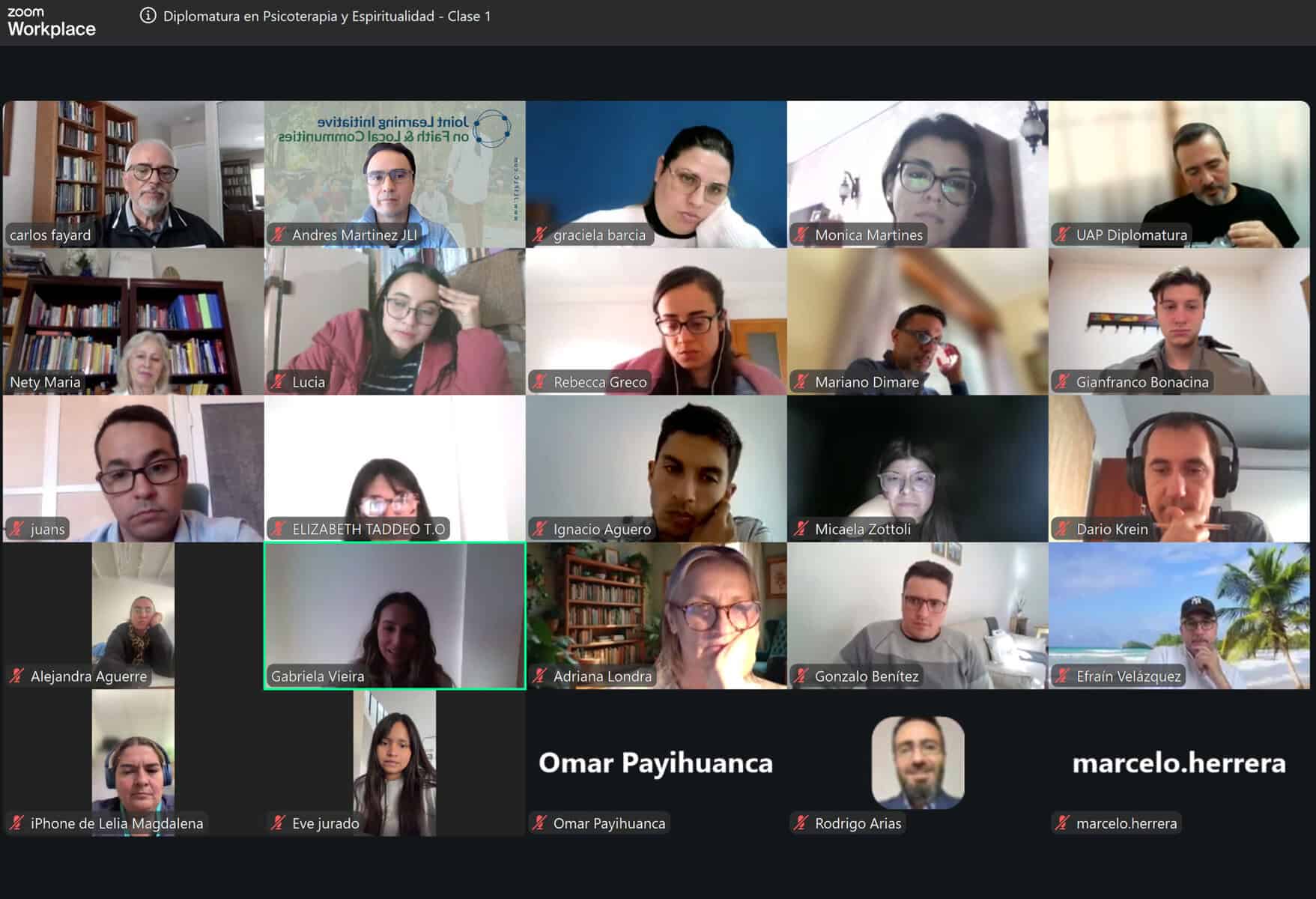






JLI LAC Regional Coordinator Andrés Martínez is participating in the Diplomatura en Psicoterapia y Espiritualidad at Universidad Adventista del Plata through December 2026. The program offers a valuable academic space for reflecting on the relationship between faith, mental health, and clinical practice, while also strengthening JLI’s broader commitment to thoughtful engagement at the intersection of religion, wellbeing, and peacebuilding.
The diploma explores how worldview, psychology, and spirituality shape the way people understand human suffering, healing, relationships, ethics, and meaning. These questions are central to JLI’s work, particularly in contexts where faith is deeply connected to how individuals and communities experience distress, resilience, and hope. For JLI, learning in this area supports a more nuanced understanding of psychosocial care, one that takes religious and spiritual life seriously as part of the human experience.
This approach also aligns with JLI’s interest in holistic and culturally grounded forms of accompaniment. In humanitarian and peacebuilding settings, people’s beliefs and values often shape how they interpret trauma, seek support, and rebuild trust. The diploma offers a framework for thinking about psychotherapy in a way that considers the full complexity of the person, including biological, psychological, social, and spiritual dimensions. That perspective resonates strongly with JLI’s efforts to promote dignity, care, and practical responses that are sensitive to context.
The program’s emphasis on worldview is especially relevant.
It highlights that every therapeutic approach is shaped by underlying assumptions about reality, human nature, and ethics. For JLI, this is an important reminder that mental health work is never value-neutral. It is influenced by deeper beliefs about what it means to be human, what sustains wellbeing, and how healing happens. Engaging with these ideas helps create space for more honest dialogue about faith, mental health, and the role of spiritual resources in care.
Andrés’s participation in this diploma contributes to JLI’s ongoing work to deepen reflection on spiritual care, psychosocial support, and the role of religion in public life. It also strengthens the organization’s capacity to accompany communities with compassion, insight, and respect for lived realities. In Latin America and the Caribbean, where religious identity continues to shape daily life and collective imagination, this kind of formation helps JLI respond with greater depth to the needs of people and communities seeking healing, meaning, and peace.