
My Work with the Hidden Peacebuilders Network
Mrs. Nawshadha Hanoon
Secretary, AMWA Association, Gampola, Sri Lanka
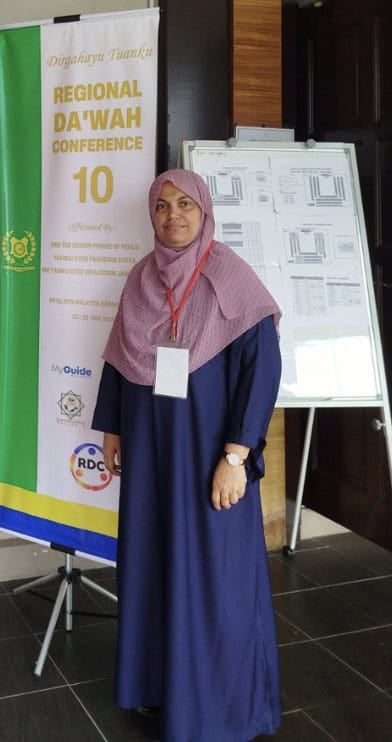
My journey with the Hidden Peacebuilders Network began in December, 2023. Initially, this started with Do No Harm for Faith Groups training, which brings together faith leaders for workshops on how to heal divisions and focus on the commonalities between faiths. I mentioned this as a journey, because continuously I participated in many workshops related to the project and I am still working towards the project’s outcome. This project occupies a special place in my life, because for the first time, I started to work with different religious and community leaders regardless of their gender. This is the very first opportunity in my life where I got a chance to meet different religious leaders together in one place, having good discussions with them. Also, I started to learn what my role is in the society as a Local Faith Actor (LFA), because I know that people listen to LFAs’ words. The training I received throughout the project helps me to play my role in the best way possible for society. Based on the knowledge I gained, I have undertaken many positive and lasting interventions within society.
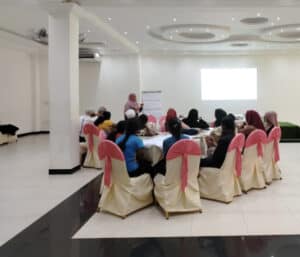
After the training and learning with the Hidden Peacebuilders Network, one of the most important steps I supported was to bring young Muslim students on visits to the religious sites of other faiths in the country. The idea behind this was to include the next generation in peace building programmes and dialogues, and I supported this decision by bringing Muslim students into the programme. As I know, Muslim students were not very close with other students of other faiths, but throughout this initiative, I provided them an opportunity to learn each other’s cultural and religious values. These visits strengthened the often-overlooked intangible dimensions of peacebuilding, especially shared humanity, empathy, compassion, and mutual understanding across faith boundaries, rooted in a shared recognition of realities beyond individual self-interest and the material world, which are essential foundations for sustainable peace.
Sharing the Religious site visit series with students
Alongside this initiative, I continue to work as a family counsellor in a Muslim Kaazi court, and the knowledge I gained through the Do No Harm training has helped to improve my skills in finding the root causes of problems and drafting action plans that lead to positive results.
Another outcome that came from working with the Hidden Peacebuilders Network, was the creation of an Interfaith Forum with the LFAs who participated in the project. We included some government stakeholders in the forum, especially the staff from the Divisional Secretariat Office. This means that we have officially registered the Forum with Sri Lankan government officials. As a result, the forum now functions as an active organisation working for interreligious peace and cooperation. We have conducted many interventions in the community with the support of the Forum, and I have gained good experience with this intervention. From here, I have been able to share my experience with different stakeholders at the stakeholder workshop held in Colombo in December 2024.
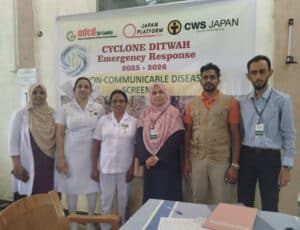
In November 2025, the Sri Lankan people faced a huge natural disaster, a cyclone named ‘Ditwah’ struck the island on the 26th of November. As an Interfaith Forum member, I helped to mobilise the forum for humanitarian interventions, helping people who were most in need. Specifically, I played a mediator role, connecting the funders with affected people. I also supported in distributing essential goods to people who were really affected by the cyclone. I connected our forum members to get the details of the affected people, showing the capacity of the Interfaith Forum to mobilise and respond to the crisis. On top of this, as a family counsellor, I assisted the recovery effort by offering counselling for the affected people. Throughout this work, I recognised that effective recovery required attention not only to people’s material needs but also to the often-overlooked intangible dimensions of peacebuilding—shared humanity, compassion, hope, dignity, and the spiritual and moral resources that enable communities to heal and recover from crisis.
All these experiences and initiatives were outcomes of my involvement with the Hidden Peacebuilders Network.I hope to do more in the future with the support of our Interfaith Forum Members and the almighty God.
My intervention in the community in the Ditwa disaster management event

0 Comments