
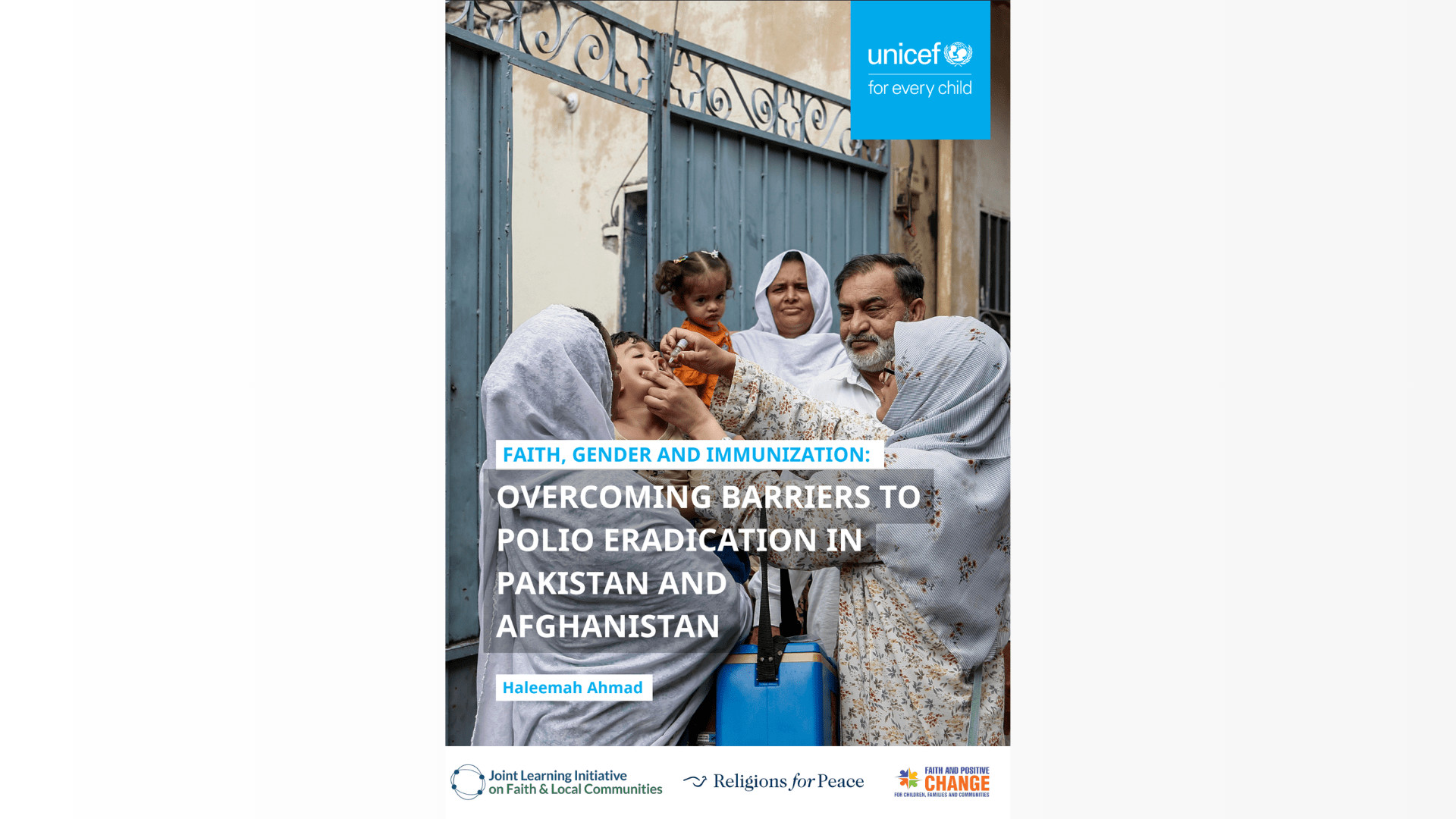




The challenge of polio eradication in Pakistan and Afghanistan is no longer just a medical hurdle; it is a complex social and cultural reality. In these regions, gender-related barriers and vaccine misinformation continue to hinder progress toward a polio-free future, affecting the health and safety of millions of children. Despite being the last two endemic countries in the world, these contexts present unique difficulties where current knowledge often overlooks the critical intersection of religious influence and gender dynamics. Yet, faith actors remain the most consistent and trusted responders, uniquely positioned to bridge gaps in community trust.
To address this, UNICEF ROSA and the Joint Learning Initiative on Faith and Local Communities (JLI) have launched the Evidence Brief on Faith, Gender and Immunization – Overcoming Barriers to Polio Eradication in Pakistan and Afghanistan. Developed under the Faith and Positive Change for Children, Families and Communities (FPCC) programme, this comprehensive resource synthesizes insights from national consultations and regional dialogues with religious scholars, institutions, and frontline workers. The brief provides evidence-informed recommendations on leveraging faith engagement to counter misinformation, address gender-based obstacles to vaccine access, and strengthen community resilience.
By highlighting the collective contributions of partners such as the Council of Islamic Ideology, Mutaheda Ullama Council in Pakistan, Khyber Pakhtunkhwa, and TAVOON Ullama Council in Afghanistan, this work underscores a unified commitment to ensuring every child is reached and protected.