





Could you briefly introduce your organization and its mission?
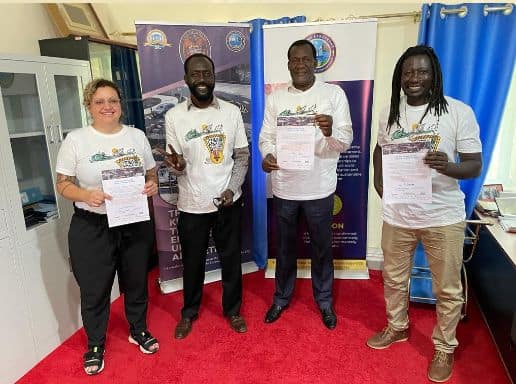
The Peacemaker Corps Foundation Kenya, located in Kisumu City is a United Nations affiliated NGO which is the leading non-for-profit organization in the field of grass roots peacemaking targeted to global youth 18 and under. The Peacemaker Corps Foundation Kenya strives to build peace through technology to promote tolerance and non-violent conflict resolution in some of the most challenging neighborhoods in East Africa, Africa and around the world.
We educate the youth on the positive exploitation of technology for peacebuilding through co-design workshops and design thinking, online zoom sessions, computer coding and community engagement on how to build peace in the context of predominant conflicts in Kenya, East Africa and beyond.
Building peace through filming as a platform for peacebuidling where young people are empowered through technology and film to tell their stories of their understanding of a better world and safer neighbourhoods and communities.
We do digital literacy (social media literacy) and disinformation awareness….and music, art and cultural strategies for peacebuilding both online and offline.

How does your work connect with social justice, human rights, peacebuilding, MHPSS, or community resilience, and what role do you see faith actors playing in these areas?
Social Justice; Our work in peace building is deeply connected to social justice, as it empowers marginalized voices, promotes equality, fosters inclusive participation and is a vehicle for social justice—it equips young people to challenge inequality, advocate for rights, and co-create inclusive, peaceful futures.
Technology tools (e.g., mobile apps, social media)give young people—especially those from underrepresented or disadvantaged communities—access to education, skills, and civic participation which reduces inequalities, a core aim of social justice and platforms give a safe space to express themselves, share stories, and advocate for their rights which challenges systemic injustices and brings their issues into public and policy discussions as well as mobilize communities for systemic change, a direct expression of social justice activism.These tech-enabled efforts, they hold systems accountable, pushing for more equitable and peaceful societies.
Human rights; Peacebuilding using technology with youth is closely tied to human rights, as it helps promote, protect, and fulfill fundamental freedoms and dignity for all —by educating, empowering, and engaging young people as defenders of dignity, equality, and justice using digital tools and platforms for example our maskani project which brings together youths from western Kenya on social media platforms to enable them to raise their voices against injustice—whether it’s through blogs, social media, podcasts, or virtual forums and focus on inclusion, ensuring that marginalized youth (e.g., those with disabilities, from minority communities, or living in conflict zones) are not left behind which supports the right to non-discrimination and equal protection under the law and document human rights abuses, share stories from conflict zones, or monitor violations in real time.
MHPSS; Our work connects strongly to MHPSS (Mental Health and Psychosocial Support) because it addresses the emotional, psychological, and social well-being of young people—especially those affected by conflict, violence, or marginalization.
Technology provides online communities, forums, and peer support groups where youth can safely share experiences and emotions that can promote psychosocial healing, reduce isolation, and foster a sense of belonging.Youth-led tech campaigns can normalize conversations around mental health, especially in cultures where it is stigmatized which connects peacebuilding with psychosocial awareness and advocacy, leading to more inclusive and caring societies.Peacebuilding programs using mobile apps or online training can teach coping strategies, conflict resolution, stress management, and emotional regulation.Technology can also link youth to mental health professionals, psychosocial services, and helplines—especially in crisis areas where in-person support is limited which ensures timely access to care.
Community resilience; Peacebuilding using technology with youth builds community resilience by strengthening local leadership, improving communication, enhancing social cohesion, and equipping young people with the tools and skills to address challenges and build a more peaceful, adaptable future ….it empowers youth as agents of change and enables them to organize, communicate, and lead peace initiatives, even in fragile environments in which they contribute to collective strength, innovation, and long-term community resilience.It promotes social cohesion using tech platforms (e.g., digital storytelling, online dialogues) to connect youth across ethnic, religious, or political divides, fostering understanding and cooperation which enhances a community’s ability to resist violence and rebuild after crises.Online peacebuilding programs teach youth problem-solving, conflict resolution, leadership, and digital literacy.These skills improve individual and collective capacity to handle future stressors, thus contributing to economic, social, and emotional resilience.It amplifies local voices and solutions through tech tools to share local stories, propose solutions, and influence decision-making, increasing community agency and ownership.This bottom-up engagement is a core principle of resilient communities.
Why did you decide to join JLI, and what value do you find in being part of this community?
We decided to join JLI to further understand the key roles of faith actors or FBOs in peace building as well as network with like minded individuals and organizations to integrate our efforts for a greater impact and wider reach. As part of this community,we’ve been able to share and listen to others about the efforts we could make in our own work to reach out to more people in creative ways using faith actors as very key players in our efforts. We are able to consolidate efforts made by different members and come up with a systematic way to reach more people and it is always a learning opportunity in the community.
How can the JLI community best support you and your work moving forward?
Continuous sharing and learning of the different initiatives within the community and the impact they have would be progressive to our work in peace building.
Financial support ( we face financial challenges to conduct our peacebuilding activities and even pay our staff who mostly work part time and volunteer therefore affecting our programmatic output).
What advice would you give potential JLI members?
It is the community to be part of if you’re constantly curious to learn and interact with like minded individuals and organizations. It is also a safe platform to share challenges experienced through your work and find help from within the community on how to go about it.
Is there a “hidden gem” from your organization that you believe more partners should adopt?
Yes: our approach that bridges theory/research and practice through local approaches that involve youth and technology.