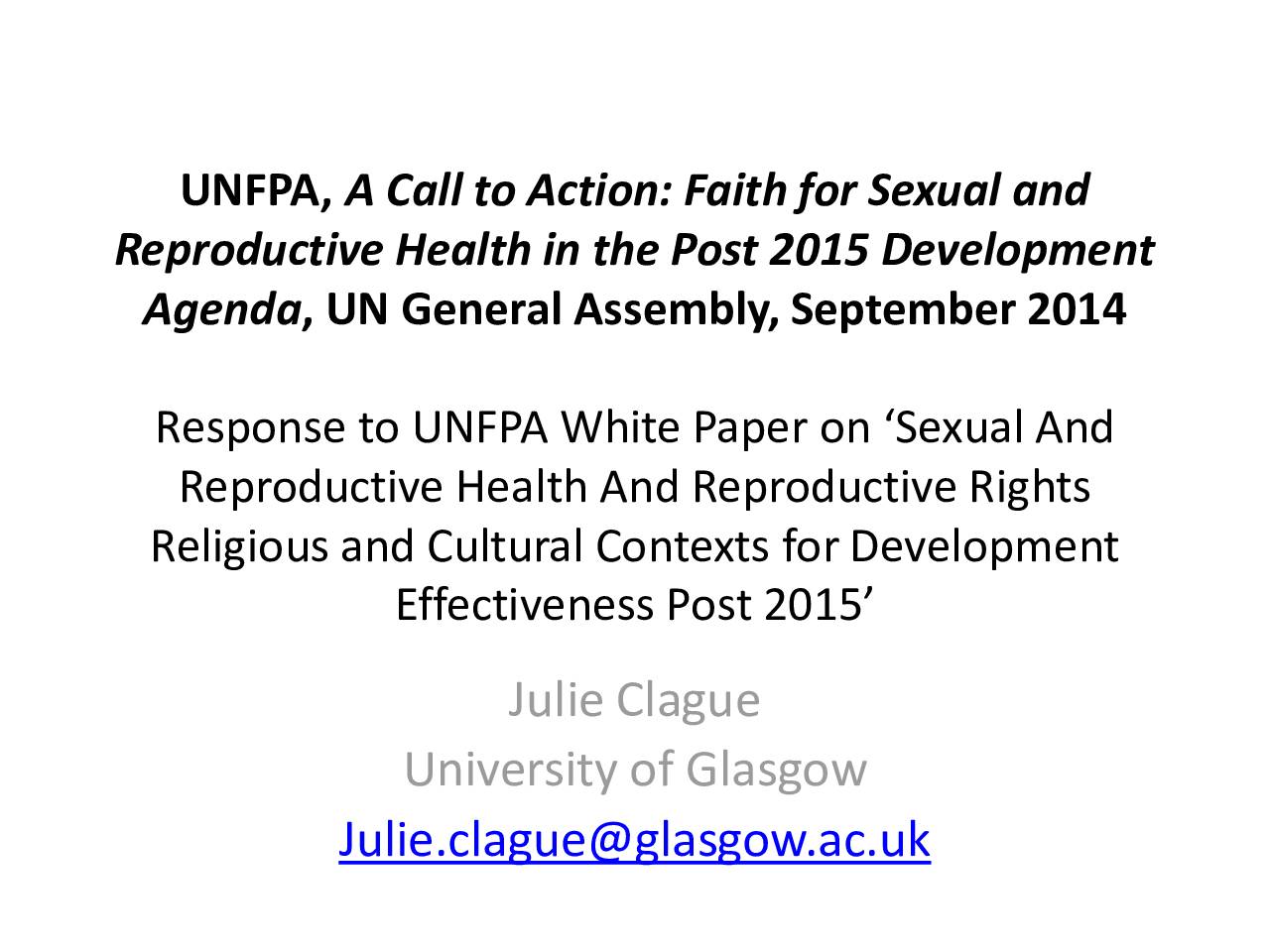
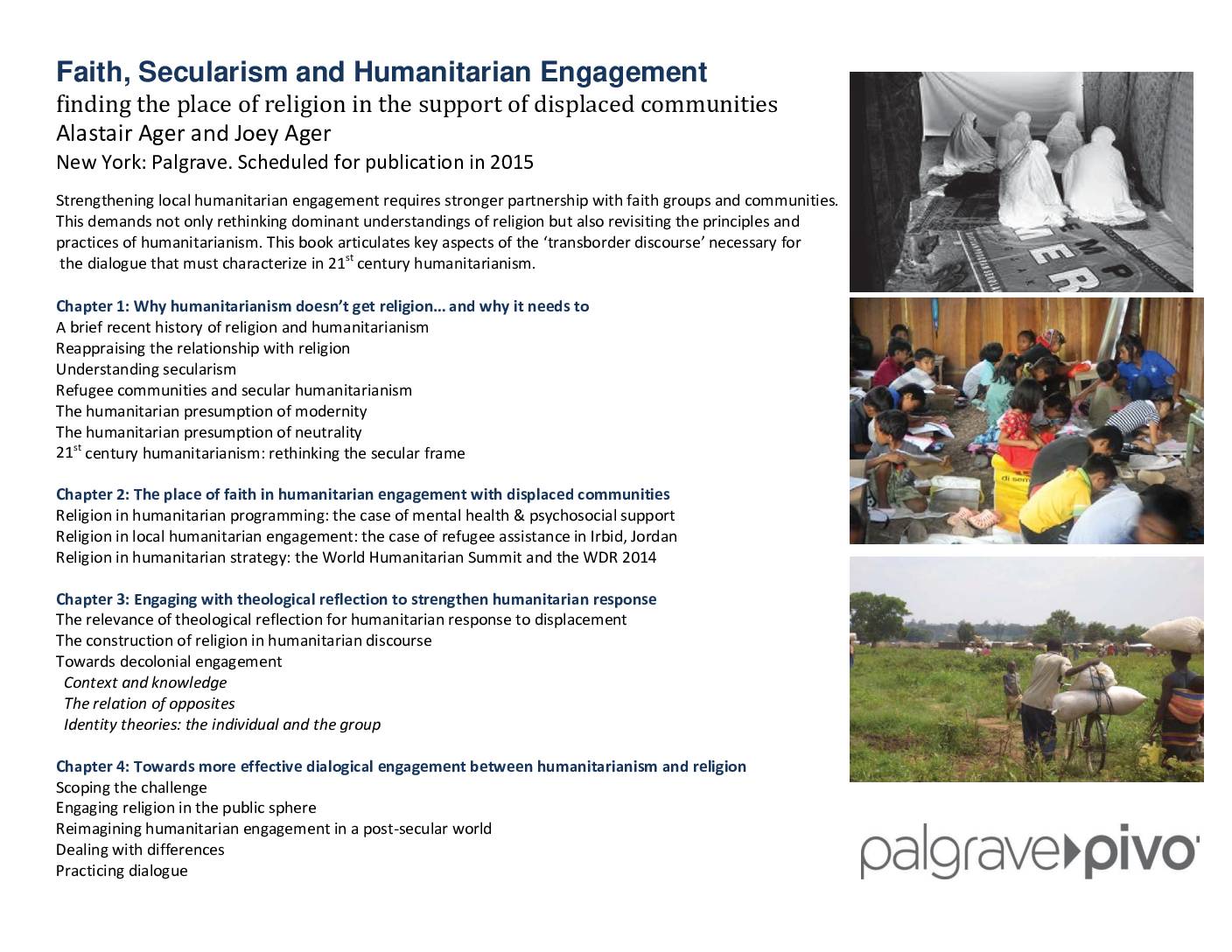
Julie Clague’s presentation to the UNFPA faith meeting for the UN General Assembly, September 2014: ‘A Call to Action: Faith for Sexual and Reproductive Health in the Post 2015 Development Agenda’. It offers a Catholic perspective on ‘Sexual And Reproductive Health And Reproductive Rights: Religious and Cultural Contexts for Development Effectiveness Post 2015’.
Published: 2014
Author:Julie Clague
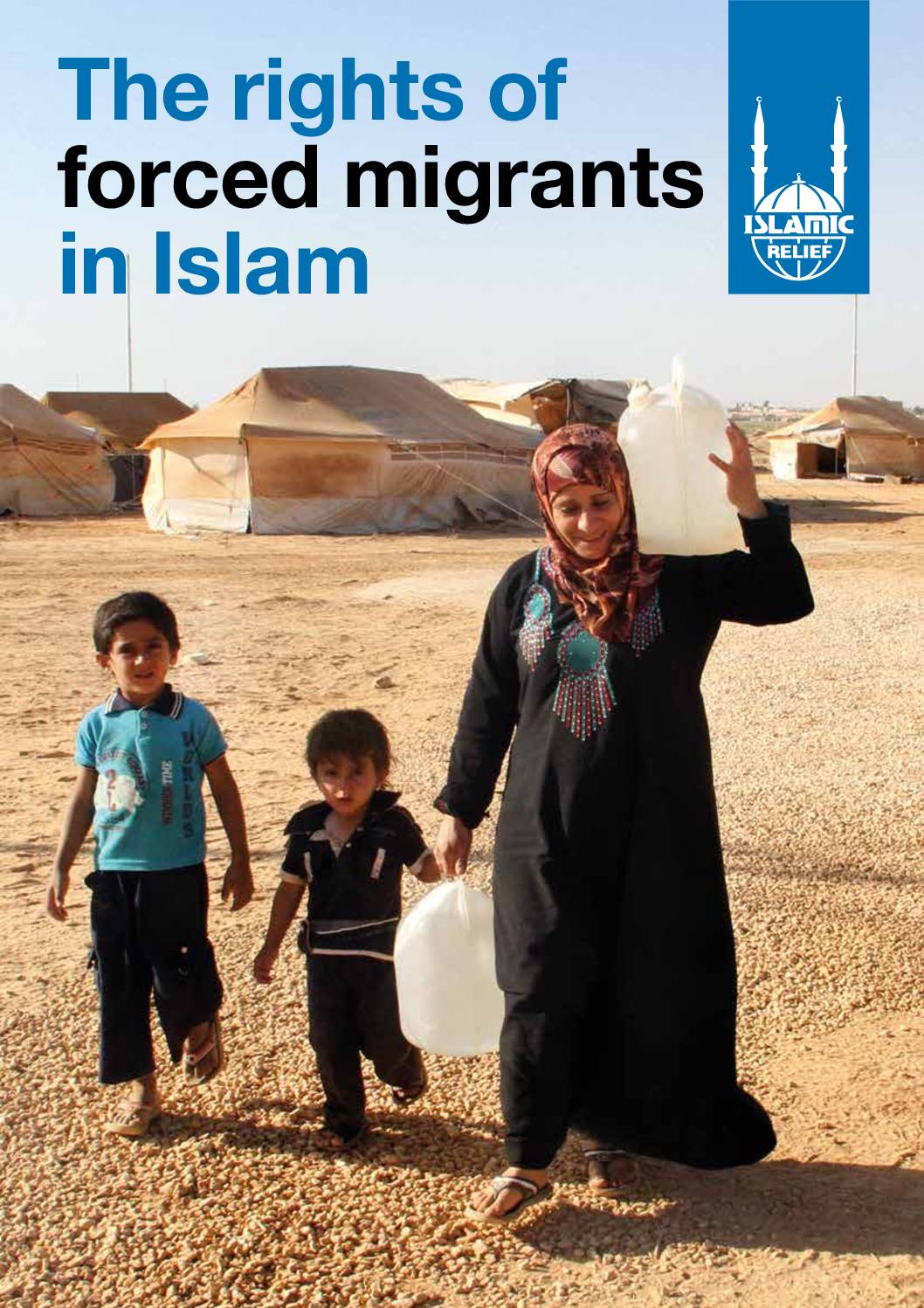
Islam has a strong heritage of protection of forced migrants. It is a tradition which provides a robust and generous framework for the protection of and provision for forced migrants, enshrining rights such as the rights to dignity, non-refoulement, equal treatment, shelter, health care, family reunification and protection of property. This paper provides an overview of the Islamic teachings related to the rights of forced migrants, and is a resource for any agency dealing with Muslim forced migrant or host communities.
Published: 2014
Author:Sadia Kidwai
Cover page and table of contents may be viewed at Emory University's page on Religion and Public Health Collaboration here. Book may be purchased at Oxford University Press' website here Description from Oxford University Press: Frequently in partnership, but sometimes…
Published: 2014
Author:Ellen L. Idler
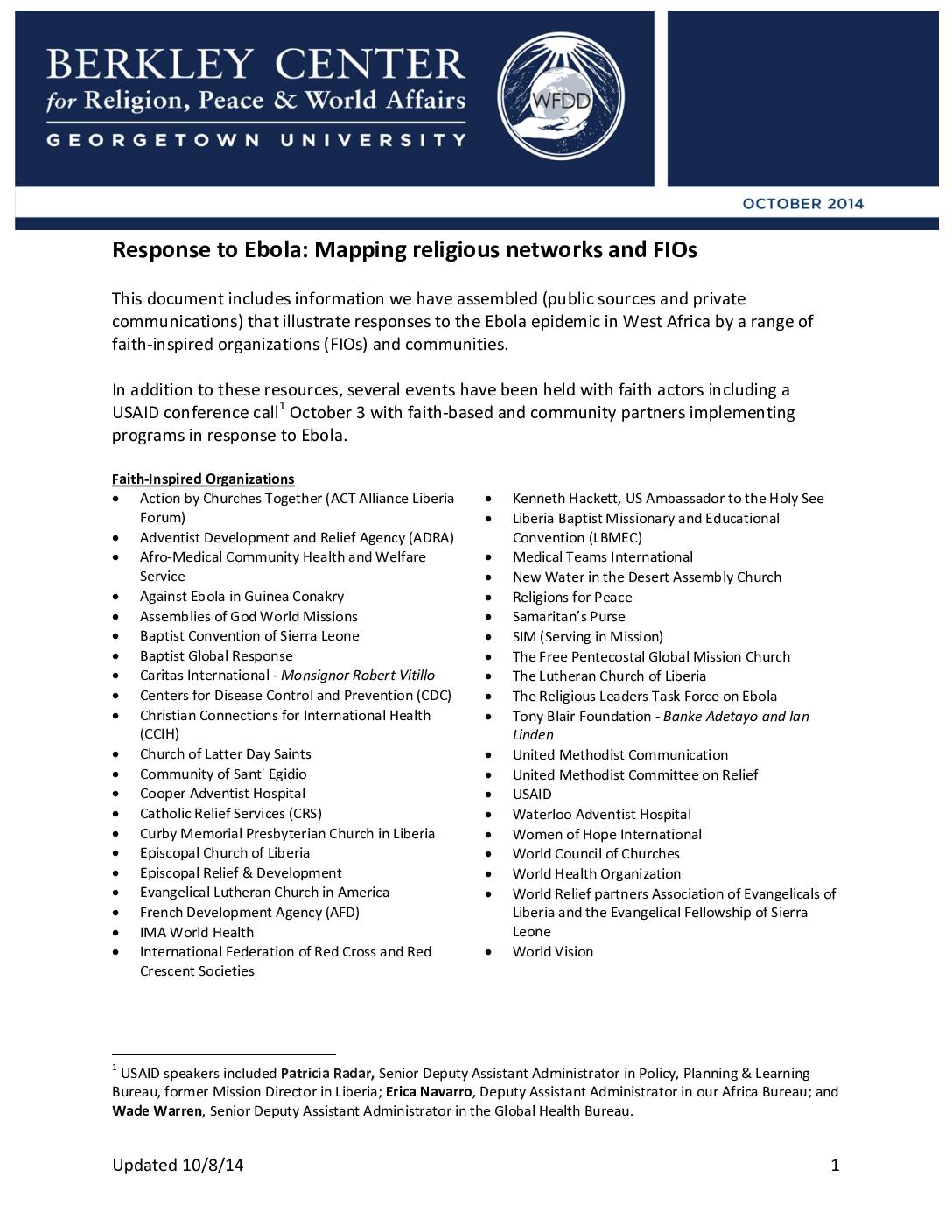
This document illustrates responses to the Ebola epidemic in West Africa by a range of faith-inspired organizations (FIOs) and communities. In addition to these resources, several events have been held with faith actors including a USAID conference call1 October 3 with faith-based and community partners implementing programs in response to Ebola.
Published: 2014
Author:Berkley Center for Religion, Peace, and World Affairs
The Ebola epidemic in West Africa highlights the special difficulties involved in responding to infectious diseases in fragile state settings with weak healthcare systems. Governments and international organizations are mobilizing rapidly to support public and private emergency systems in Guinea, Liberia, and Sierra Leone (as well as preparedness in neighboring states), but the needs and speed of the epidemic currently overwhelm available capacities (local and international). Challenges are exacerbated by the epidemic’s fast pace and changing dynamics. Informed predictions point to a continuing escalation of cases and to wide‐ranging, grave repercussions for economies and societies, including threats to basic healthcare and food supplies, across the region. The crisis demands immediate responses along many urgent dimensions but also points to underlying, longer term needs that call for new directions in development strategies. Networks of religious and faith‐inspired actors are a resource that could magnify the impact of urgent responses and recovery plans.
Published: 2014
Author:Berkley Center for Religion, Peace, and World Affairs
Katherine Marshall Senior Fellow, Berkley Center for Religion, Peace, and World Affairs at Georgetown University Georgetown University's Berkley Center for Religion, Peace, and World Affairs and the World Faiths Development Dialogue (WFDD) organized a meeting on October 6 Summary of what is…
Published: 2014
Author:Katherine Marshall
The Heythrop Journal Special Issue on Faith, Family, and Fertility: On Faith, Health and Tensions An Overview from an inter-governmental perspective
Published: 2014
Author:Azza Karam
HOST: jliflc.com
REQUEST: /resources/
QUERY: count=25&page=71